

Microplastics as a Growing Threat to Human Health?
The 38th International Cotton Conference Bremen, taking place from March 25 to 27, 2026 at the Bremen Parliament, once again underscores its role as a leading international platform for scientific exchange and industry dialogue. This year, the program also tackles a particularly pressing and sensitive issue: microplastic pollution.
Microplastics Detected in the Human Brain
Microplastic contamination is currently the subject of intense debate, both within industry circles and among consumers. Key questions remain at the centre of this discussion: where microplastics occur in the environment, whether they pose risks to human health, and what their primary sources are.
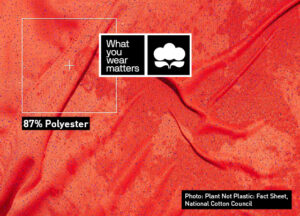 “Every time synthetic clothes are washed and worn, tiny fragments called microplastics break away. These microscopic particles never disappear. They enter our waterways, our soil, and become airborne, finding their way into our bodies. It is estimated that we inhale or ingest anywhere from 74,000 to 121,000 microplastic particles per year.” https://plantnotplastic.org/
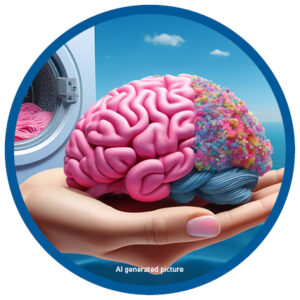
AI generated picture of a brain partially covered by microfibres
A recent survey conducted by Cotton Incorporated reveals significant knowledge gaps among consumers regarding microplastic pollution—especially concerning the role of everyday clothing as a major source. Recent studies report the presence of microplastics in the human body, including:
- Detection in vital organs such as the brain, kidneys, lungs, and even the uterus
- On average, people inhale or ingest between 74,000 and 121,000 microplastic particles per year [Cox, Covernton, et al.]
- Some research findings suggest that up to 130 microplastic particles per day can accumulate in the lungs through inhalation [Borgatta and Breider]
“When consumers realize that tiny plastic fibers from clothing can end up in food, water, and even in our organs, the issue becomes very personal,” explains Marjory Walker, Vice President, Council Operations, NCC. In response to these findings, the NCC launched the new awareness campaign “Plant Not Plastic.”
Current status presented in Bremen
At the Bremen Cotton Conference, Plant Not Plastic will now play a central role in the conference program. Immediately following the keynote speeches on Wednesday, March 25, Marjory Walker of the National Cotton Council, together with Dr. Jesse Daystar of Cotton Incorporated and Dr. Richard Venditti of North Carolina State University, will present and discuss the current state of affairs.